
What we install
Air source heat pump installation
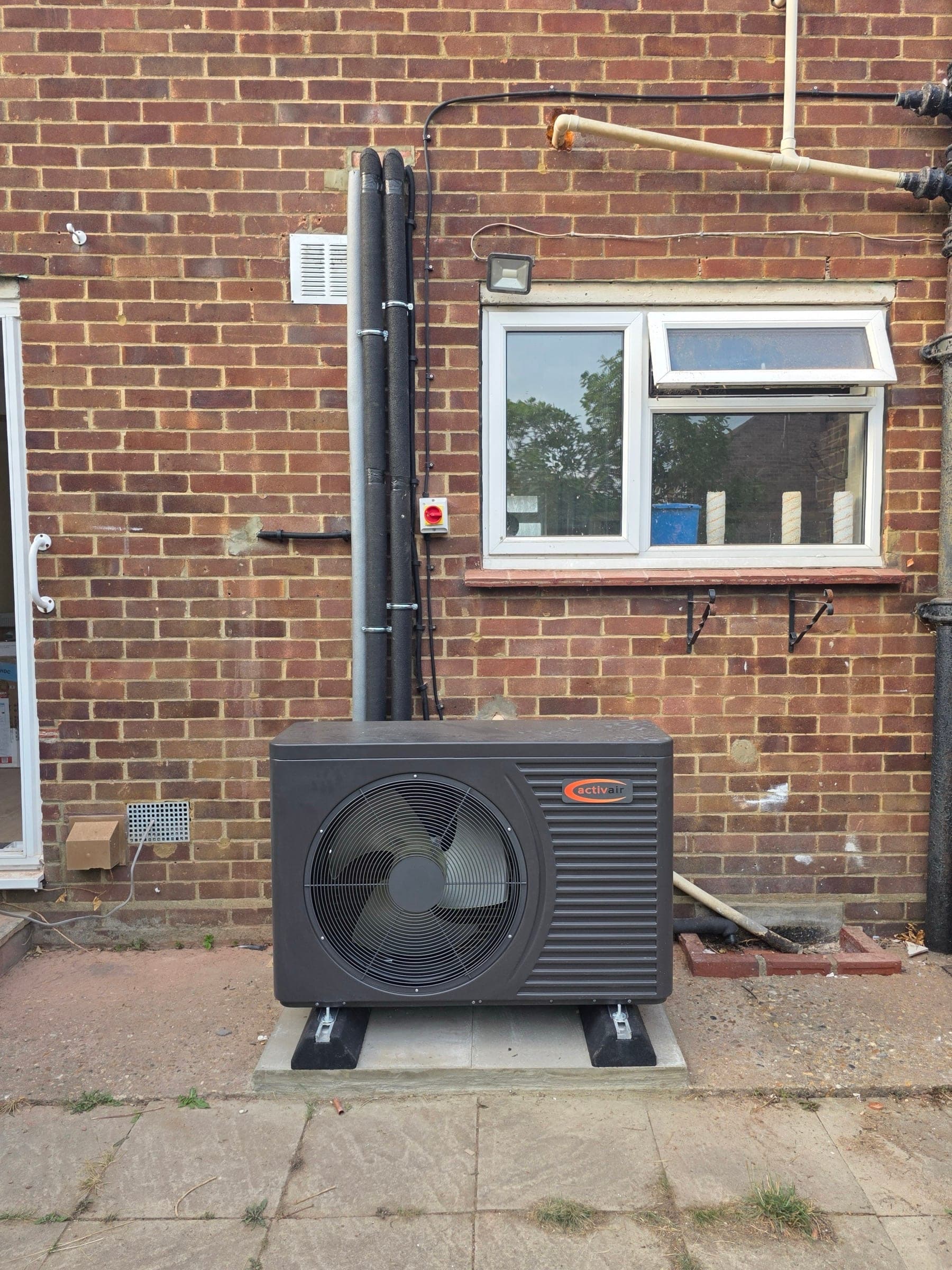
Air source heat pumps for homes replacing gas, oil or electric heating, designed to a room-by-room heat loss calculation.
How it works
An air source heat pump extracts heat from outside air using a refrigeration cycle, then transfers it to water that circulates through radiators or underfloor heating, and to a hot water cylinder for taps and showers.
Heat pumps run at lower flow temperatures than gas boilers. A boiler might run at 65 to 70 degrees; a heat pump is usually designed around 45 to 55. Lower flow temperature is what makes the system efficient, and it is also why radiator sizing matters. Some existing radiators will be large enough, others will not.
Efficiency is expressed as a coefficient of performance: the ratio of heat delivered to electricity consumed. It varies with outside temperature and with the flow temperature the system is designed around, which is why a room-by-room heat loss calculation is done before anything is specified.
A heat pump needs an outdoor unit with clear airflow, and space indoors for a hot water cylinder if you do not already have one. Where a property has a combi boiler and no cylinder, finding that space is part of the design work.
What we do on a job like this
- 01Carry out a room-by-room heat loss calculation for the property rather than sizing from floor area.
- 02Assess the existing radiators, pipework and hot water arrangement, and identify what needs changing.
- 03Find a position for the outdoor unit that works for airflow, noise and access, and check planning requirements where relevant.
- 04Specify the heat pump, cylinder and controls, and set out the design flow temperature the system is built around.
- 05Install, commission and balance the system, and set the weather compensation curve.
- 06Show you how the controls work, and leave written documentation of the design and commissioning figures.
Worth knowing before you commit
- Insulation first, where it is cost-effective
- Heat loss determines the size of heat pump you need. Where straightforward insulation work would meaningfully reduce it, doing that first usually means a smaller and cheaper system.
- Radiators may need changing
- Running at a lower flow temperature means some radiators need to be larger to deliver the same heat. The heat loss calculation identifies which. It is rarely all of them.
- Running cost depends on your tariff
- A heat pump uses electricity, which costs more per unit than gas. Whether running costs go up or down depends on the efficiency achieved and the electricity tariff you are on. We will not quote a saving figure without knowing both.
- The outdoor unit makes some noise
- Modern units are quiet but not silent. Position matters, particularly near bedroom windows or a neighbouring boundary, and it is assessed at survey.
Also available
Request a property assessment
Every quotation follows a survey of the building. Tell us about the property and we will arrange one.